Episode Transcript
[00:00:00] Speaker A: Hello, dear heart. Welcome to the Flourishing Practitioners podcast, where we talk all things about space holding, caring for our clients and succeeding in our businesses. We explore the wisdom from coaches, counsellors and healers.
My name's Gabriel Walker and I'm so
[00:00:17] Speaker B: honoured that you're here.
[00:00:18] Speaker A: Let's dive in.
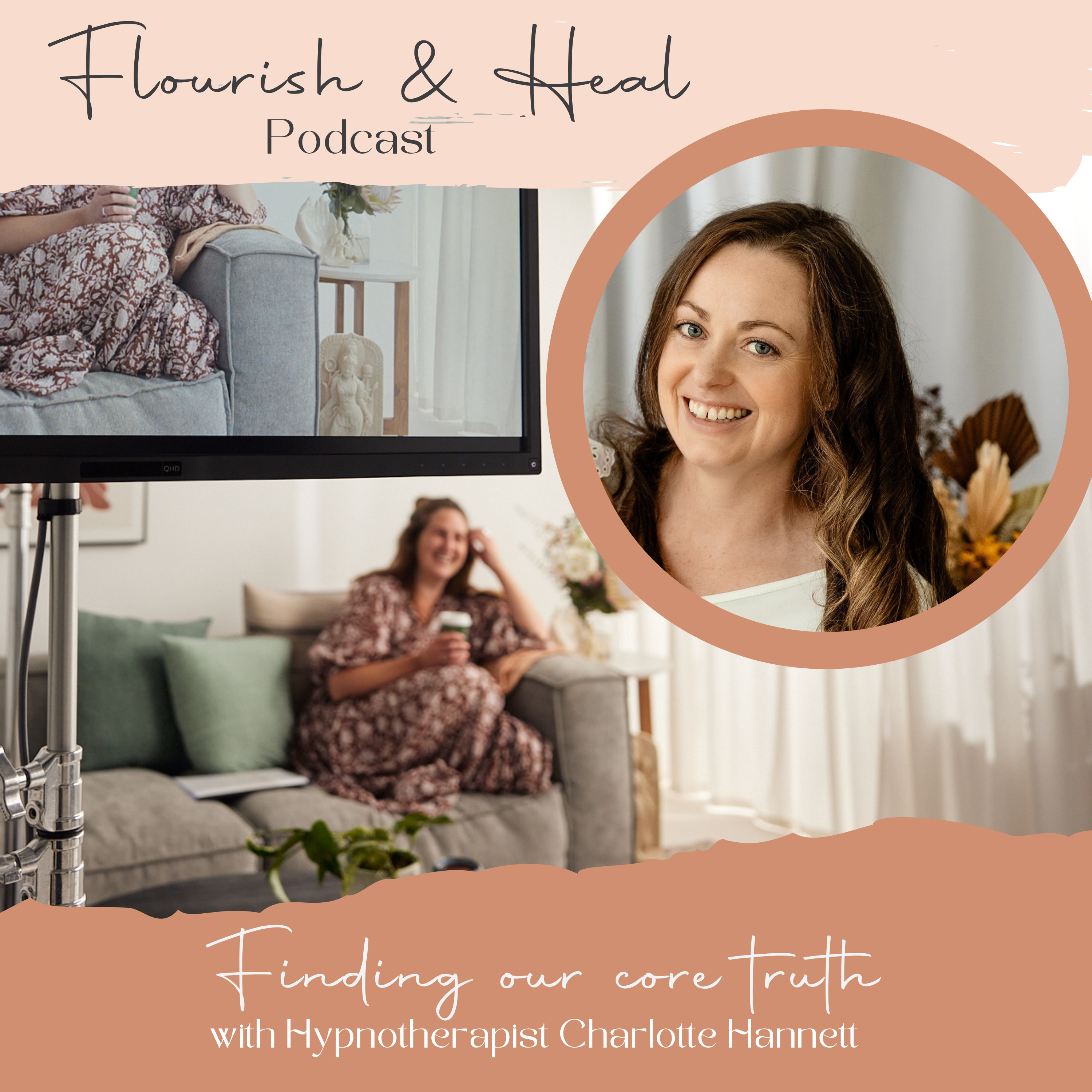
Today's episode is with Charlotte Hannit, a hypnotherapist and someone I've known for most of my life. We met in kindergarten and Charlotte is part of my very first hum memory, which we touch on.
So it feels really special to have her here. We have been friends, yeah, across our lifetime in many different contexts. Charlotte's journey into hypnotherapy began after experiencing it for herself. And a few years later, she wanted to really trial some things in her own life. And what started out as a bit of an experiment became something she really genuinely loved and eventually turned into her practice. Charlotte loves to support people to create positive change and we talk about hypnotherapy and some of the misconceptions around it. There's some beautiful moments in this and it really ties back to self validation and what it means to live in greater connection with yourselves. And because Charlotte and I have known each other for so long, there are a few throwbacks to our younger selves in there, too. Our partying days in London, we didn't even touch on our partying days in Palmy, but here we go. This is my conversation with Charlotte. Hannah, I'm excited to have you here. Thank you for being here. I start with what's on your heart today.
[00:01:42] Speaker B: Something that's been in my mind lately is that word congruence and what that actually means just living in the energy that I want to live in. I went through such a phase of like, a tick list and not even a tick list in my mind, but a tick list on a pen and paper journal. Real old school, where it was like each day I had to do all these things to be congruent.
And it's like I'm shifting out of that phase. I'm like, no. To be congruent isn't taking your vitamins and doing your stretches and your Kegel exercises and being a good daughter and a good this and a good that. It's for me, I'm leaning more into those basics of living in the present moment, checking in with how I feel. What do I actually need? What is actually going to be nourishing to me, rather than just looking at my list of things. What I want for my clients ultimately is I want them to see the best in themselves and I want them to be kind to themselves.
And so I guess that's what I mean in terms of congruence. So it's like seeing the best of myself and not having to have this tick list of stuff that I need to do each day to be a good person, to just shifting that and waking up and just reminding myself how lucky I am. It's going back to that core basic stuff that I want for other people in my life and going, hang on a minute. That's what congruency is to me. Living in that energy myself.
[00:03:07] Speaker A: You needed to have it in yourself as well, to be able to share that with others.
Was there something that activated that for you?
Going more into that congruence vibe?
[00:03:17] Speaker B: There were times when I would have short patience.
I wasn't exactly feeling aligned in terms of I think and say one thing, but then I was showing up in another way. I was sweating the small stuff. Even though on one level I was like, my God, I'm so blessed in so many ways, I'm so lucky.
Still allowing myself to get caught up in the day to day small things and letting that bring my energy down and letting that get me into a bit of a negative headspace space.
Just feeling like this is not how I want to live and feeling like it wasn't me, like it wasn't it was other. It comes down to what does it come down to? Society's expectations, comparing yourself to others. You know, the ways that we're all brought up, the expectations, whether they were validly put upon us or we put them upon ourselves. What we assume people think, what we assume people need and want from us.
Clearing away all of that and getting back to basics and getting back to my connection to myself, which is a big theme with my clients. Like people ask, you know what, what do people come to you for? And it can be such a range of things and it's almost like such a range of symptoms, but ultimately most of the time comes down to your connection to yourself. I don't speak for everyone, but for me I definitely got disconnected from myself in childhood and it's been a bit of a journey of getting that back. So yeah, in summary, connection to self is what is up for me right now and what congruency means to me and what I am moving towards.
[00:04:52] Speaker A: Thank you.
So I do want to talk more about your hypnotherapy and your journey to that. But I guess I wanted to clue everyone in about, I think you're my Oldest friend. You and Jenna, I with me. But you, I think I met you at kindergarten. No, I met her from birth.
[00:05:08] Speaker B: She wins.
[00:05:08] Speaker A: So around childhood, I think we grew up in a space where it was sort of one way to live that was at least the.
Now I look back and I could see lots of people living different ways. But there was a one way message because we had the one school and everyone was having the same education and you could see how people were living on one hand. There was a aspect of accepting everyone. I don't remember judging about how much money people had or anything like that. But there was also this. You have to be something better or different. I remember feeling like I had to achieve a lot and not really knowing how the hell I was doing that and always feeling like I was falling short. So that was my sense of my upbringing. One thing I've learned from working with people along the way is everyone's absorbed different messages from those same things. I guess I'm curious. I asked Wendy as well when I interviewed her about how would you describe our upbringing? How would you describe where we're from and how that impacted you?
[00:06:06] Speaker B: I probably haven't thought on it much as you have. Like small town. I think you're right in terms of it seemed as though there was kind of one way of doing things and everyone was more similar than we were different in school. It's that fitting in to survive, right? So figuring out how to fit in as a way of surviving it. I enjoyed growing up in a small town. Overall, I think it was a good thing for me personally, I think I had a great childhood. I had wonderful friends.
Of course there were the ups and downs of everything. I think as I got to be a teenager, it's that angst. It was that people think that they know me and I need to get out of this town. I had very much that. Obviously we both did a lot of travels and then even when I came back when I was 30, I struggled to fit back in, went away again, came back again, and now I love it. I caught up with some people actually from high school and they were like, you know, they're living in Dublin, Paris, et cetera. And they're like, you're back here. Like, are you really happy? Kind of questioning it. And I'm like, yeah, I really am. But I think that's because what I want has changed, my priorities have changed
[00:07:23] Speaker A: and
[00:07:26] Speaker B: my family dynamic definitely shaped me and has made me more grounded, has made me more understanding of people and it brought out a very caring side to me, a very empathetic side.
When I was young and almost a little bit of reading the room and I guess in a good and a bad way. Right. So, like reading the room as a child, in some way, you start disconnecting from your sense of self because you start thinking about everyone else and their needs and starting to put their needs before yours at quite a young age. Then also in a good way, being able to get along with all different types of people and understand the challenges that some people go through and to be able to empathise with that at a young age as well.
[00:08:14] Speaker A: Did you want to say anything about your feminine dynamic or not? You don't have to. Just what you were referring to there.
[00:08:22] Speaker B: Yeah. Growing up with two older siblings who had intellectual disabilities.
Growing up thinking it was normal and that my family dynamic was completely normal and not really thinking about it until I was a teenager. It was almost like, you know, when you have the realization that your. Your parents are human.
[00:08:39] Speaker A: Yeah, I saw it as completely normal too. I didn't even think of it. I used to remember running into your siblings around the place. I mean, like.
[00:08:47] Speaker B: Which is cool as well, to be exposed to that at a young age. Right. But I think it was that realization when you grow up and you realized, oh, my parents are human and they're just doing their best. And it was that same thing. It was like, oh, yeah, my family is set up a little differently. And that did, I think, contribute a lot to the way that I am, and I think, in a really positive way.
But I do actually feel lucky to have grown up in a small, small town.
I always remember when I was living in Sydney, like, everyone would refer to me, I'd say something, they'd be like, oh, that's the fielding in you. Oh, that's the keyword. You're like, oh, yeah, there goes Charles again.
[00:09:23] Speaker A: I remember once, were we in Melbourne and we were doing that school reunion thing and you were like, how come everyone can use chopsticks? I remember thinking, that was so funny.
You're like, I. I'll give myself a pass because I grew up in Fiori and we're all in chopsticks.
[00:09:39] Speaker B: I don't remember that, but it sounds like me. I can kind of use them. This.
I remember when I moved to Auckland, I'd never had sushi until I was, what, 19? Like, when I left home, like, never had, like, never had.
[00:09:50] Speaker A: I'm obsessed with Vietnamese. I think it's because I'm like, it was a new taste. I was just like, oh, My God. I like, here's something I've never eaten because we just had that Asian place. The only one I really remember was, like, the one underneath the movies. And then sometimes the fish and chip shop would have Asian, but it was, like, not even real Asian compared to what we know now.
[00:10:11] Speaker B: It's just that smorgasbord where you'd get a small carton and, like, fill it up with noodles and some vegetables covered in oil or sweetened sour pork.
Have that with your fish and chips. And that was like, oh, this is different.
Because it wasn't, like, made in free veg.
[00:10:27] Speaker A: I'm curious because I always think something that I guess I like about our connection is, like, you know me from different phases, and that included going to London and traveling and those sorts of things. You were outside of London, but I was in London. What made you want to travel so young? Like, we were quite young when we went traveling. Like early 20s.
[00:10:47] Speaker B: Yes.
[00:10:48] Speaker A: Moving to Europe. What inspired you in that way to do that?
[00:10:51] Speaker B: Yeah. Now I think of, like, my daughter doing that. I'm like, no. But my dad. Because my dad, he traveled when he was in his sort of late 20s, and I just grew up hearing his stories. He had his best mates still from those times. And I remember he had a photo album, obviously, like a physical photo album. And it would just have random photos of him going through Africa, like them at the back of the truck with a fire. He'd have all these stories of working in Scotland and the people that he met there. And I grew up knowing some of those people as well. And just the laughter and the stories and the connection and the good friends that he seemed to make from those times, I just found that so appealing. And I think subconsciously, it was like, this is an option. This is a path that's open to you. It was just always a thing that he had done. So I guess it just felt like it was something that I could do. Not that I consciously was aware of that thought process at the time.
[00:11:52] Speaker A: Did you expect to go to uni?
[00:11:55] Speaker B: I remember standing in seventh form, so year 13. I remember standing in the queue at the bank, and I was behind a teacher from school, and they were like, so what university are you going to? What are you going to study? And I remember that question, innocent question. He was just trying to connect and ask me something. But it really bothered me, I think, because I didn't know, and I felt like it was expected. That was what you do at that time in our lives. And I got okay marks and I Guess it's coming back to that. I had a very much people see me in a way, and it annoyed me. Like, I remember feeling like I was kind of trapped in this box in those teenage years. And I think traveling was a part of me discovering, like, who I was and what I actually wanted, and kind of an opportunity just to get out and figure things out for myself rather than feeling I had this kind of role to play.
So it was definitely the right decision for me not to go to uni, But I remember it being a really difficult situation at the time. I just kept going back and forwards on that, thinking, this is what I should be doing. I'm capable of it. So, of course, that's what you do. Right.
So it felt like a bit of a jump and a bit of my rebel side, but also a relief when I made that decision, which is when you know it's the right choice. Right. And I guess it was one of those things that you can always come back to as well.
[00:13:19] Speaker A: I remember a teacher similar when I chose to go to Ecuador for my exchange, being like, you're going to fail at live.
Like, actually pulled me into the staff room out of break. I know. So weird. It was quite impactful. It made me doubt myself for quite a while after that. When I went. When I did eventually go to uni, I was like, really thought I wouldn't do well because I was like, I'm gonna be a failure. It was good in the way that it drove me at that time, but it's so random, that attitude.
[00:13:47] Speaker B: Isn't it wild that an adult can think that they can say that to someone when you're a teenager?
[00:13:52] Speaker A: I see it now, I'm like, oh, she was being caring about me.
And to be fair, who was letting me go to Ecuador? I mean, I think of Quinn or whatever, and I'm like, 17. It's pretty young. But also, yeah, we've got our own path, and it's about us discovering that in our own way. So what led you to studying hypnotherapy? What guided you there?
[00:14:15] Speaker B: Okay. With the media version, I went to see an amazing hypnotherapist, Caroline Craneshaw. Highly recommend. She's unreal. During that session, she said to me, you'd be really good at this. And I remember just thinking, as if, yeah, right. Clearly, she doesn't know me very well. But on some level, that comment must have kind of stuck with me a little bit, because then a few years later, I was at a phase in my life where I was just really looking at, okay, what do I want to do in my life? Career wise, job wise. I always knew from a young age that I loved helping people and that I wanted to help people, but I just wasn't sure how. Then I was looking at different courses and different ways of helping people, which is such a broad thing, right. And basically that comment pumped into my head. So I thought, I'll just have a look and see what courses are around.
And it was a course that I could do whilst working full time in my own time online. And so I thought, well, worst case scenario is I learn a bit about myself.
At that point, I thought it was a pretty slim chance that I would actually do this as a career. And then the more I studied it, the more I loved it and the more it just felt like it clicked. And it didn't feel like study, it didn't feel like work. I genuinely enjoyed the process of learning and I tried to learn other things and I'd find my brain would drift off and you know when you're reading a book and you read the same sentence three times and it still doesn't go in?
I'd had that experience where with this, I just, yeah, loved it and absorbed it. Yeah, it just clicked. Still though, I was like, I guess once I was studying, I got to the point where I would think, oh my God, I would love to do this as a profession. How cool. Maybe one day, you know, I had that slight possibility of it.
But then I also had that thought of, okay, like, I get it, I believe in it, it makes sense to me.
But does it really work? That thing of, does it really work? And I think a lot of people hear hypnotherapy and they think that as well. Like, does it really work? And it's, what does that even mean? So I guess I kind of thought, okay, so what is something in my life that I can almost experiment on with self hypnosis?
Something that, if I'm honest with myself, I've been wanting to change for a long time. If I'm honest with myself, I am a little bit hesitant about changing this thing in my life. But right now I don't believe that I probably ever will. And that was my relationship with alcohol.
I experimented with that. I ended up giving up alcohol and am still alcohol free. And the wild part is I'm happy about it.
Like, there was a time when I just thought, oh my gosh, if I take alcohol away, I'm taking out a route to connection. I'm taking out joy, I'm Taking out relaxation. I'm taking out possibly new friends. I saw alcohol as a route to connection and a route to relaxation and a route to switching my mind off and having more confidence. I saw it as a route to lots of positive things. So it was really questioning that within myself.
Giving self a chance to experiment with who I was without alcohol. You know, almost going into a social setting and being like, oh, wow, this is wild. How am I going to feel in this situation without a drink in my hand? You know, almost like relearning myself and re getting to know myself. And yeah, one of the best things I ever did from where I was. It still blows my mind that I can genuinely sit here and say I feel great about it because I thought something would be missing. I thought that I would always be longing for it. I'd always have that craving. I thought that I would feel like I was withholding a source of joy in my life or something like that. But I. Yeah, even now I'm just sitting here with you and I'm just almost scanning myself to say, do I miss it? And I really don't.
So, yeah, once I did that, I was like, okay, well, it works.
And yeah, that was how it all started.
[00:18:19] Speaker A: How would you describe hypnotherapy for those who don't know about it?
Hypnosis. What's the best word to call it? Hypnosis?
[00:18:25] Speaker B: Yeah, hypnotherapy. Because big emphasis on the therapy part, right? It's not stage hypnosis. A lot of people, they think of that straight away.
I like to think of stage hypnosis and pee as like pizza and pasta. They're both from Italy. They might both have tomatoes in them, but they actually very different dishes. They're very different experiences. They're different eating experiences. So that science kind of how I see it, it's like saying to a rugby player, how do you play basketball? Do you know what I mean? Like, to me, they're just so separate. But I completely understand that when people hear hypnotherapy, they think stage hypnosis.
So big emphasis on the therapy. And basically it's just using that natural state of hypnosis that you allow yourself to go into. It's not mind control. I'm not forcing you to do anything. It's just you allowing yourself to relax enough to. To slow down, to access those alpha brain waves. From that place, you can access your subconscious mind. Our subconscious mind is in control kind of roughly 95% of the time. So our actions, our behaviors, our thoughts Reactions to things come from our subconscious mind and our conscious mind, it's really only 5% of that. So once we can relax, access our subconscious mind, we can create meaningful, lasting change, positive change in our lives. It's just a really empowering way to, I was about to say, become the person you've always wanted to be. Reconnect to who you truly are and reconnect to your truth, what's aligned to you, your priorities, how you want to show up in the world, getting back to that innocent part of you, that true part of you. Before life happened, before all the bullshit
[00:20:02] Speaker A: came in, have you found that there are barriers you encounter in your own self with stepping more into the space?
[00:20:11] Speaker B: Yes is like the answer that comes up straight away. And then I have to stop and pause and think of what I guess self belief that in a saboteur that we all seem to have, you know, who am I to think that I can help people?
I think I used to have that little thought of, well, my life's not perfect and I'm not perfect, so what business do I have guiding others? And obviously none of us are perfect and we're not aiming for perfection. I think everything that I've been in through my life, it adds to what I can offer other people.
And I think something that's always been within me is to see the best in people, which is something that I've questioned over time whether or not that's something I should step in back from.
But it's inherently a part of me and who I am. And I think it's actually a beautiful thing to bring into the healing space. It's something that I'm working on within myself as well. I can do that so easily for others.
And that's part of what drives me, is that I want to help other people see themselves in that same way. So I am continually working on seeing myself in that way.
But yeah, if we all walked around seeing the best of my in ourselves, what an amazing world would live in.
And it's not selfish, it's not conceited.
It's just looking at ourselves with kindness and compassion and understanding and acceptance.
Like, wow.
[00:21:48] Speaker A: Imagine I'm thinking more from the practitioner perspective of thinking back on when you were first deciding to step in. What would you say to yourself that you wish you knew, now that you know, now that you wish you knew,
[00:22:00] Speaker B: then what would I say to myself that I know now that I wish I knew? Then just start and don't focus on your lack of experience or that there's still so much to learn. Or there's other people out there who are more experienced or who could maybe help these people better.
Look at it from a point of view, like when you break it down to your intention. And I know within me I have a true heart and a positive intention. A true positive intention.
I'm not doing this from a place of ego or I'm not doing this from a place of finances or anything like that. And to know that will shine through and that people will feel that from you and that even holding space for someone and just truly listening and having a positive intention, wanting a positive outcome for them, truly wholly, that can be so healing within itself, no matter what else you do within the modality, just truly listening to someone, giving them the space to open up, telling them or helping them to feel that all parts of them are welcome.
That you come at it from a place of curiosity, not judgment, stripping it back to that. I think no matter what modality you do, just what is my purest intention here? And then just having, holding that true to yourself, no matter what session you do, it would work and flow.
Yeah. Don't worry too much about the techniques and all of that stuff that will come.
Just being. Yeah. A safe place for someone is huge because we don't all have that. Right.
[00:23:42] Speaker A: Do you feel like you're starting to specialize in a certain area or seeing certain types of clients, or is that changing all the time?
[00:23:50] Speaker B: I'm not actively specializing and for a while I felt like I should and I was thinking, oh, I should niche down into something.
But the longer I do it, the
[00:24:03] Speaker A: more I don't want to have that debate with people.
I'm so interested in so many things
[00:24:10] Speaker B: and I think no matter what the symptom is, no matter what the reason is for the person coming to you, it's very rarely just that. Right. It's the core issue, the core wound, the core thing that needs healing underneath that.
And often it will come down to something similar for most of us. Marissa Peer, she's one of the most well known hypnotherapists and she says it comes down to three things.
She talks about the feeling of not being enough, of feeling as though what we want isn't available to us and a sense that we don't belong. So. So her hypnotherapy technique is based off those three things. So once you heal those three things or one of those things, whatever it is that is up for you, she says that the rest will follow and that the symptoms are easier to Overcome because you've healed that part of you. So I think for me, what comes up most so is that coming what I keep coming back to, it's that core of who we are, that inner knowing, that inner sense of self. So I think it's almost getting out of our heads and connecting back to that heart, that soul, depending on what you believe in, that true essence of ourselves, our spark that a lot of us seem to get lost along the way. I think it's just coming back home and coming back to your truth and coming back to you is probably what I'm most passionate about.
Obviously, a lot of inner child work as well. Most things come back to healing a younger part of us.
So to answer your question, no, I don't specialise in anything.
And I guess the reason I'm leaning towards probably never specializing in anything. Who knows, I might change my mind next month, but is because I think it's not about the thing that people come to you with. It's not about the weight loss, it's not about the relationship issue. It's about the connection to self and how you see yourself.
That is underlying, bold, italic. That one, how you see yourself, I think is huge.
[00:26:11] Speaker A: I so agree.
What is the process normally with clients coming and things shift in one session, or does it take more normally?
[00:26:20] Speaker B: The true answer is that it's different for everyone. It depends on the person and it depends on the outcome that they're looking for.
So I have some people who come for one session and they might want to say, quit sugar. And they're like, yep, cool, done, and off they trot, and that's great. Or I might have someone who comes in who has anxiety around a certain area of their life and we might look into that, but then realize, oh, hang on, there's some other core wounds that need to be addressed as well. I love to work with clients for more. Around six sessions. I feel like that you can really get into the nitty gritty of it. Some people aren't ready for that. Some people are like, no, no. I just want to deal with this top layer thing and that's cool too.
I'm just happy to meet people with where they're at in their journey and if I can have a positive session with them or have some kind of positive impact or they leave the office feeling better than when they walked in or feeling more empowered or, yeah. More capable or I guess better in any way than when they came in, then I feel like, cool, I've done my job and it might be Something that they come back to, obviously, with hypnosis. All hypnosis is self hypnosis. So once you learn the sort of the techniques behind it, you can use it throughout your life.
Which is a really cool thing, working with like, children and teenagers, which really lights me up. I love those sessions because I just think, oh, my gosh, if I knew this stuff as a kid, as a teenager, like, wow. So even though obviously they're coming to me because they're going through hard things and that sucks, it's also like, how cool that you're gonna learn this stuff and you're gonna go away with a truer sense of self and more confidence, and that's just gonna be so beneficial to you for the rest of your life. I just think it's very, very cool.
[00:28:12] Speaker A: What would be the difference on how young people engage with adults?
[00:28:16] Speaker B: I think really young, it's a very different session because it's, you know, attention span. You're wanting to make gamify things a lot more. You're not peppering them with questions. They're not telling you their whole life story. It's a very different session. So often it's more having a half an hour session with them in person and then I'll do a recording and send that to them to listen to of an evening. Teenagers, interestingly, teenagers do seem more open, which they might present to the outer world as more closed, pissed off, basically.
But I find.
Oh, I don't know if it comes back to that. They can sense that I see the best in them or they just feel a little bit. A bit more comfortable. But I find that it's interesting how much they open up and how perceptive they are as well. Once they're given a chance to be. Once, yeah, they're given an opportunity to kind of connect into to them rather than all the outside noise.
I think the difference I see with adults is that we have been through a lot more. We've been. I don't know if tainted is the right word from the things that we've been through, all the voices that we've heard, what's been in the media.
So we're almost like a bit more of a tangled ball, if you think of a ball of will. And I guess teenagers are still a bit of a ball of will, but when you're adults, it's a bit more knotted.
I think child sessions are set up quite differently, but teenage and adults, it's sort of similar process in terms of come in, have a big chat. I'll just ask all the questions, see where the session goes, find out what they're wanting to get out of it, and then I'll just think, okay, what techniques do I think are going to help them get there? What is going to hit home for this person or what will help them unravel it? So I don't look at it as. I'm not here to point out the answers to anyone. I'm here to help them figure out the answers to. For themselves, which I think is way more powerful. Right. Like, no one likes to be told what to do.
[00:30:18] Speaker A: No.
[00:30:18] Speaker B: Yeah.
[00:30:21] Speaker A: It's interesting how. How powerful it is to learn not to do that in life and then how people don't know, but it changes the way people react to you.
[00:30:32] Speaker B: Yes. I even find myself, though, with, like, friends, you know, you're chatting about a problem or something that's up in their lives. And sometimes I'll even say, okay, I'm responding as your friend Charlotte. Or sometimes I'd be like, I really want to respond as a hypnotherapist. Can I take what I think from that angle? Because I feel like there's always the two. I've always got the two voices in my head.
[00:30:53] Speaker A: Definitely.
Even in session, sometimes I'll be listening to something therapeutic, compassion. I'll be like, okay, this is Gabrielle. I think this is not a good idea. This does not sound why. They'll go back to, like, okay, how do you want to move with this? I'll go back to listening to you.
It's not often that I do that, but sometimes I really just have to, for my own morals.
[00:31:15] Speaker B: Say this thing I've said a few times. I'm like, this is more of a personal recommendation. This is, like, off the clock.
[00:31:21] Speaker A: How do you find that, though, as a friend navigating that space now? It's sort of natural for me. But, yeah, initially I found it really, really hard to not therapize people. Or it was just like, my brain was always listening in that certain way of where are the blocks?
Yes.
[00:31:36] Speaker B: And sometimes it depends on who I'm around. Like, I know that some friends are more open to it than others, but I do find myself even, like, watching TV shows and things. I'm like, what would I do if I was in a session with them? Or, oh, I can see what they. You know, you sort of. Which is fine when you're watching telly, but with friends, my brain starts initially going there and I need to catch myself and then bring myself back and go, no, just listen as a friend, like, you Wouldn't want. If it was the other way around, you wouldn't necessarily want someone. Sometimes you do, sometimes you do want to be told, what would you do? What do you think? What's your perspective on it in a professional scene? But most of the time we're figuring it out for ourselves by having a conversation with our friends. We're sometimes saying it out loud for the first time and you start making sense of it as you speak.
So my brain starts going there and I go, hang on, paused.
You're not in a session. Stop taking notes. Just bring yourself back. Just ask questions. And yeah, just try to listen more than figure it out for them because they'll figure it out for themselves, right?
[00:32:39] Speaker A: I've got a lot of early career therapists or people who are studying counseling in my life and I find it so funny. There's a phase I see where they start like listening more intently. It's really annoying as a friend because you're like, like they'll see about the like almost like waiting for you to speak more. I'm like, I'm done.
But then I also remember phases where I went through that. It's made me really aware of it when you're being a friend, just be a friend. But then also like you have knowledge and wisdom that sometimes you are like, okay, I want to share this thing. This person might not know. And it's not from a you should do this place. It's just from a, oh, like I hear you're this or I hear that like using some of the skill set, offering it to them if they want that rather than a you shouldy thing.
[00:33:26] Speaker B: Not a big long lecture, maybe just a sentence or two sometimes. Yeah, I guess I'll maybe chuck some in like half joking, like almost a bit self deprecating about what I do. Like oh, tell that voice in your head. You know, just something a bit of a jokey way and who knows, maybe it will stick.
[00:33:44] Speaker A: I was talking to a friend the other day who's a therapist as well and I was like, man, I almost don't know how to be human anymore in a conversation. I'm so used to going really deep straight away because all most of my friends are therapists or in the healing field or something.
You know, we know we've got an hour. Like we can't really do about an hour.
[00:34:01] Speaker B: What is the core issue here?
[00:34:03] Speaker A: I find I do that in other situations. So when I'm doing that like small talking thing, sometimes I'm like, oh, you want me to respond now? But Nothing's coming. I don't really have anything. Some old foxy to tell you.
[00:34:15] Speaker B: Yes. You become almost like more self conscious in those conversations than you do in the deep ones. I went on a date once with a guy and it was someone kind of. I knew he was like, I always end up in a deeper meaningful with you. And I remember thinking this wasn't deep.
I just remember thinking, oh, okay, we've got real different gauges on.
[00:34:38] Speaker A: I was curious about what's the difference in energetics? How would you describe the energetics of hypnotherapy? I guess I was thinking with Rumenomi people they go off almost into a completely different space. And then with counselling there's still like a bit of presence. Energy is moving more through talking, whereas like Romiromi is more through energetics.
Yeah, like what's happening to therapy? How's that sitting?
[00:34:59] Speaker B: I would say both because you have the two aspects right. So you have and you're coming and you're having a chat, your conscious minds are talking and then it's allowing yourself to go inwards and to really switch into that parasympathetic nervous system to go deep and access your subconscious mind and connect into your body at the same time and just see what comes up. And it's interesting the difference sometimes of people between the pre chat and the post chat. You're nodding because it's like they just seem more at peace and sometimes they'll want to dissect the hypnotherapy part of the session. Other times they're like, I just want to chill on this vibe. I want to stay here and just like enjoy this. And I'm like, cool, just let it process. Have a great day, I'll see you later kind of thing. I just go off what the person's wanting. Not everyone's wanting to analyze it. Some people, the shifts are still going to keep unraveling and unknotting after the session as well.
Sometimes I'll say to people, you know, it's a great time to journal as well after the session, see what else comes up. Obviously most of the time it's re listening to the recording as well to gain more insights, but also to start locking in those new neural pathways. There's new ways of being.
So I'd say a mix of energies as well. So a bit of both.
[00:36:20] Speaker A: Is there anything other things of hypnosis that you would want me to ask you or that you think I should ask?
[00:36:26] Speaker B: The biggest misconceptions about hypnotherapy is that it's you are hypnotized and that it's low key mind control and that someone's going to come in and change my brain. None of that. It's a you allowing yourself to go inwards, relax down to a place to access your inner truth, your inner guidance, your inner wisdom, your inner knowing.
All the credit goes to the client. The client is the one that's doing the work. I'm just the guide suggesting of where maybe we should go.
Every session is different as well.
I don't want to say it can help you with any area and anything in your life, but it's kind of low key. Can I know that sounds crazy broad, but like I said, often it's not the symptom, it's what's underneath the symptom. It's those core wounds, those core things that need healing and nourishing or need reconnecting to and almost a relearning of what we already know and coming back to that. It's okay to be skeptical. I absolutely was too.
So I am totally open to people not believing that it it's okay to be skeptical. I came today just excited to talk to you and see where the conversation went.
[00:37:40] Speaker A: Would you mind if I ask some personal questions?
[00:37:42] Speaker B: Of course, of course.
[00:37:45] Speaker A: I'm just curious about what it's been like being a single mummer.
[00:37:48] Speaker B: Oh yes.
What has it been like being a single mum? I could answer this from so many different perspectives, but overall, like the first thing that comes up when you say that I just feel this overwhelming love and this overwhelming, overwhelming.
Like I just feel so blessed and I feel so lucky. Like every morning I wake up and for a while I was doing on purpose, I was waking up and reminding myself how lucky I am. And now it just happens automatically. Like before I open my eyes, I'm just like, oh, I'm so lucky. And I can just sense that other little being in the house and I'm just like, yes.
Is it hard? Yeah, of course.
But two things can be true, right? It can be hard. Sometimes you're like, oh my God, I just wish there was someone else to take the bin out, fold the washing, deal with this meltdown, cook dinner, make me a cup of tea. My God, it would be nice to someone to make me a hot cup of tea and to be able to sit down and drink it, to have a sleep in. Oh yeah. That would be on my goal one day maybe, hopefully.
But there's yeah. Oh. Without sounding cliche, like it's the Best thing I do. I just feel so lucky and so blessed and so honored that she came through me and that I get to be her mum. I still look at her and marvel and I'm just like, my God, you're so beautiful and awesome. And yes, there are times when we butt heads and we disagree and I'm like, you're three years old. I can't imagine what you're going to be like as a teenager.
But, yeah, she's just everything.
[00:39:22] Speaker A: How does it feel doing a practice while being a mum?
[00:39:25] Speaker B: I've come to a place where I feel really proud of myself. For a long time I was living in an energy of I should be doing more. How am I going to get this business to grow? Maybe I should just go get a normal job. How am I going to do both?
But yeah, I've come to a place where I'm like, but you are doing it, Charlotte. Like, you, you're doing it.
And my priorities in life are her, then the business, but also me as well. That's a third one that I've chucked in the mix. As we all know, we need to look after ourselves to better look after others. And that's enough. Like, I don't have to, like, I'm looking now out the window. The lawn needs mowing, that's fine. The kitchen needs a deep clean. That stuff, that's fine. They can just be way down the list. I struggled with that for a while, feeling like I needed to have it all together.
But I've realized that if I had all those things together, I would be dropping the balls that are most important to me.
I'm excited to feel like hopefully I'm going to be a good example to her that you can follow your passion in life and you can genuinely help others and make a living.
I'm excited to.
She probably won't want to, but, like, share kind of what I know. And I already just do little hints and little droplets of metaphor stories. And a good example was on the weekend we went and did Harry's together for the first time. I know Throwback used to do running the running club way back in the day.
And it's something that I've been thinking of joining back up to. So we went down and I said to her, look, you know, there is a run for the little kids, so if, you know, you can just watch though, if you want to. And she's like, I want to do it. And in my head I was like, you're three. I don't know. But it turned Out. It was one where everyone was starting off together. So basically we did a lap, so a K together, and she ran the whole way. And I was so proud of her. And the whole way was saying things like, your legs are strong, they're powerful. Look at you going up that hill. You've got this. We're nearly there, halfway there.
So all the little, like, tricks of the mind that I know is just drumming in all this positivity to her. And then she ended up waiting with Mum because Mum came down with us too. So waiting with her and then while I kept running and then she wanted to do another lap. This kid has not run more than 10 meters in her life. Like, she will go out and play, but if we ever went for like a walk or a scooter and she's got to walk 10 meters, she's like, please carry me. So I was just so proud. She ended up doing 2Ks. And halfway around the second lap she was like, my legs are tired. And I'm like, here's some extra power, here's some extra energy.
Because it's all mindset. Everything in life, right, is mindset. And I think that I can run because I used to run. It's not necessarily that there's a difference between me and someone else. I have this belief in myself that I can complete it and it'll be fine. Even if I'm sore the next day, I can keep going.
So I'm excited to share the things that I've learned and the kind of little the mindset hacks or see the type of person that she'll grow into. And I'm sure she will challenge me.
[00:42:34] Speaker A: I had a challenging month. A few different things happened, but I was like, oh, every once in a while, running a practice or running a business, I get a broken arm. But I don't have to live in the chronic pain of working for someone else. Sometimes those moments are really intense where I'm like, oh, my God, how am I going to get out of this?
Or that survival thing comes back in, but it's temporary.
And then you go back to doing what you like doing and life is more flow.
[00:43:00] Speaker B: Yeah, it definitely goes through my head sometimes. I'm like, it would be so much easier. Clock in, clock out. You've got that certain paycheck at the end of the week or the month. You're not thinking about it outside of work hours. Maybe, you know, how has being a
[00:43:14] Speaker A: mum changed your dating life?
You don't have to answer anything. I'm just curious.
[00:43:18] Speaker B: I'll have a vulnerability hangover tomorrow. How's it changed my dating life? Oh, do you know what? It's leveled me up in my dating life. I think before I was probably accepting of attention and I was still looking for outside validation definitely.
Whereas now I don't have the energy for that. I think I've worked on having the internal validation so much so that I don't want to say it's completely gone. Obviously you still want to be liked and admired and some sense of the word. I think it's definitely made me want different things in a partner. I guess the priorities of what I'm looking for in a partner has changed because it's not just for me, it's for her. Again, it's one of those cliches like it's not just about me anymore but it's true cliche for a reason. And I really am looking for someone who is going to be an amazing father figure to her that would get me over the line with someone. Of course I want to feel connected to them as well but that's huge and obviously that wasn't a concern or really a thought before. And to be honest, before I wasn't dating thinking would you be a good husband? Would you be a good father? I should have been but I wasn't dating from that energy.
Whereas now I just, I don't have time for the situationships, I don't have time for the mucking about. I just, I. And it's not just that I don't have the time and energy for it, it's like I don't want it. I still very much want someone in my life. I still very much am open and hopeful and do want to meet my person.
[00:45:02] Speaker A: Actually strikes me a bit the same energy as alcohol and that it almost sounds like you're saying, oh, I'm surprised that I don't want that, you know, and it's not me but it's that energetic of okay, you're going to fulfill this thing inside of me and I really want that. And then now it's more from a place of like do you fit my life? How are you going to be in my life?
[00:45:25] Speaker B: Because the thing that I realised about alcohol what was keeping me on that train was that connection because I believed and thought that it brought me connection to others.
And you're so right now that I have a deeper connection with myself and I like myself, I don't need the external validation or I don't need that connection to other that is actually not serving me to my Highest good. Whereas before I felt like I needed it.
Whereas now I like, I want a true connection and I want a deep connection. Absolutely.
It just keeps coming back to that connection with self.
I'm not searching for someone to fill that gap or fill that hole anymore because I've filled it. Which sounds a bit corny. Who am I? Oh my gosh. Honestly, 20 year old me would just be like 20 old us.
[00:46:14] Speaker A: I've had so many flashbacks in this talk of like different moments of our life.
[00:46:19] Speaker B: I remember traveling on the bus for an hour in London to come to meet you. Yeah. To go partying.
[00:46:26] Speaker A: Oh. I always think of, Is it Heaven? That nightclub we went to, the gay club.
[00:46:32] Speaker B: Probably.
[00:46:33] Speaker A: I just remember there was no doors on the toilet and like all these men were. And I was like, what is happening?
[00:46:39] Speaker B: Unisex bathrooms with no doors. Oh my gosh.
Probably day drinking or probably early morning. Like, God, four, five, eight, out.
But I kind of love that we have that part of us and then we've got this spiritual deep sense of self. I love that. And I feel like that's a cool thing you can switch between because then you can relate to so many different people depending on the energy that they bring into a session. You're like, okay, I can be more in my swearing a bit. Kind of like relate, understanding. Or you can go more into your higher wisdom energy vibes, balance it out
[00:47:13] Speaker A: depending on who you're with.
[00:47:15] Speaker B: And then I love that with you I can just have both. And there's no like, oh, that's not Charlotte. You're like, I see you. I know.
[00:47:22] Speaker A: I often think of that like, well, what the heck?
[00:47:25] Speaker B: We had some soul lessons to learn.
[00:47:27] Speaker A: Even when you were talking about giving up alcohol. I'm not advocating for being an alcoholic, but that was fun.
I know that it's not a good thing to take into your adulthood, but in that age, it was a lot of fun times too.
Was.
[00:47:43] Speaker B: That's how I frame it to myself now. I'm like, my soul wanted to have a human experience. I have given it the human experience.
[00:47:50] Speaker A: Love that.
Definitely. I'm so glad you were in London with me. Even if we didn't see each other that often, it really did make me feel safer in a way to have you there and to know that it was really helpful.
[00:48:02] Speaker B: Yeah.
[00:48:03] Speaker A: Bizarre situation. Like the whole thing was like, awesome.
I always remember thinking like, here I walk out the door and nothing really that different happened. I walked up the dog park. It's like the same people at the time there. It was like Every day you walk out your door and you're like, what's that? Like something random in the world. People fighting on the streets. It was just so.
[00:48:22] Speaker B: From someone from Fielding opens your eye to how other people live. I remember, like, realizing, because I worked mainly in pubs over there, people drink on a Monday.
I remember thinking, ah, I didn't know you could do that. I didn't know that was a thing. Just, wow. People go out for a roast meal on a Sunday and they drink and they get really drunk on a Sunday.
[00:48:44] Speaker A: I remember the first job that had. It was like a data entry one, and they hadn't had the computer system set up, and so they sent us to the pub and it was like o' clock in the morning. And I was like, what do they do?
[00:48:55] Speaker B: Cups of tea here? Like, what are we scone.
[00:48:57] Speaker A: Like, can I ask you something?
You are a part of my very first human being memory.
You know, at kindergarten, those big tires that were in the ground. And I remember hiding in there. Hiding from you. I think we're doing a running race around the kindergarten shuffle. And that's my very first memory.
[00:49:15] Speaker B: Oh, that's crazy. I didn't know that I was actually thinking. I was like, what's my first memory of you? I don't know whether, like, this was something like our mums put in my head or whatever, but I just. And I think I have said this to you before as well, but I feel I was drawn to you because we both had Big Buffy here.
I just remember thinking, oh, like, she's got Big Buffy here, too. I don't know if that was actually from when we were three or four, but that is why I think we're friends. That's what it comes to.
[00:49:43] Speaker A: I love that.
As we wind up, is there anything else that's on your heart to share?
[00:49:48] Speaker B: Just thank you for always being such a good friend in my life. Over the many years that we've known each other. I feel like you're someone that I can always come back to. And I love our conversations. And I think I've said this to you before, but, like, you inspire me to be vulnerable and honest and introspective at the same time. And I just appreciate that about you so much. And that's probably what you do so well on this podcast, because it's inherently who you are. And that's what it's about. Right. Kind of analyzing ourselves and getting a bit vulnerable and getting a bit honest and learning from each other and sharing and. And being open and.
Yeah. Thank you for asking me to do this with you.
How cool.
And, yeah, just thank you for being you. You're amazing. I love you, buddy.
[00:50:37] Speaker A: Thank you so much. I really appreciate it. And, yeah, thank you for being present and sharing your story and your work with everyone, so welcome.