Episode Transcript
[00:00:00] Speaker A: Hello, dear heart. Welcome to the Flourishing Practitioners podcast where we talk all things about space holding, caring for our clients and succeeding in our businesses. We explore the wisdom from coaches, counsellors and healers.
My name's Gabriel Walker and I'm so honored that you're here.
[00:00:18] Speaker B: Let's dive in.
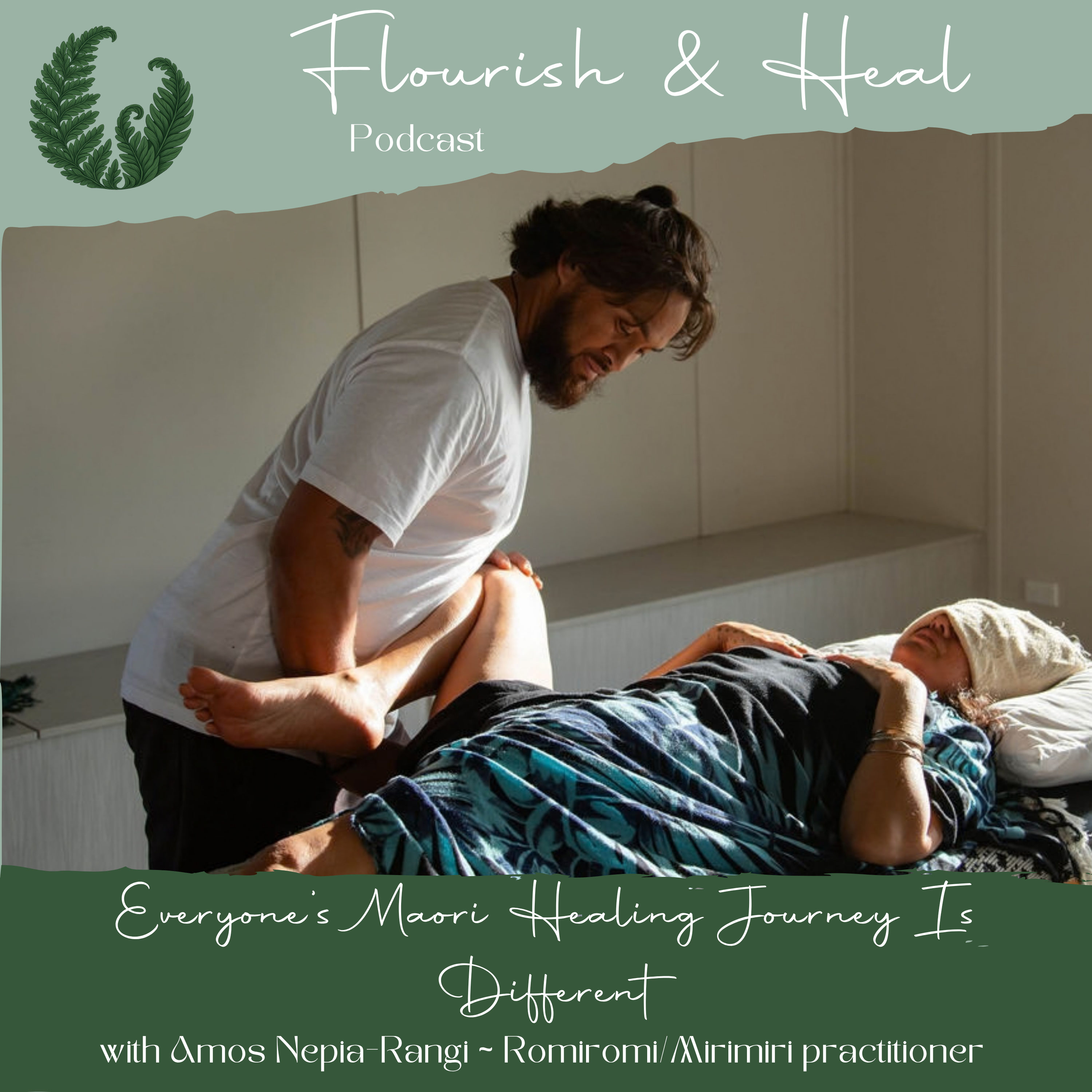
[00:00:19] Speaker A: Today's podcast is with Amos Nepia, also known as Moss. And Amos is a Romirui and Marimiri practitioner, a space holder, a facilitator, someone who has walked alongside me as a Kairahi, a guide with Akotoro Whnui. And I know that it's been a really big and beautiful journey for him, reconnecting with his own whakapapa in a new way after having learned Romiromi and mri. He holds a lot of wisdom and holds a lot of space for our community as well. In this conversation we talk about coming home to ourselves, about healing mori identity, remembering grief, whnau and what it is to re embody and re step into the memories of the practices, the rongo that we grew up with and have maybe been disconnected from or potentially not being disconnected from, but re seeing with different eyes. We also talk about working with tane or men, and the importance of safer spaces for our men, for our masculine, for relationships and the way that parenting weaves into this as well. This is a beautiful conversation. Yeah. First, I just wanted to touch base about an upcoming Romiromi and Merimiri Waananga. This will be the last one that I am holding for the foreseeable future. I don't know what my future has in store for me. I do need a little break from teaching. And so October, not this weekend, but the coming 1, 17th and 18th we have the Romiromi weekend. And then 24th and 25th we have the mini mini weekend. So if you are a last minute joiner, I know that some people are, please feel free to reach out. You can just reach out if you feel the pull and set up a payment plan. But without further ado, I will stop talking so that you are able to hear Amos.
[00:02:10] Speaker B: Today I am here with Amos Napier, also known as Moss. The question I always like to start with is what's on your heart today?
[00:02:19] Speaker C: What's on my heart today?
My whnau hope, just everything that's going to come forth for the future or what holds myself. That's what's on my heart at the moment. Was my little brother's birthday two days ago.
[00:02:32] Speaker B: Sorry about your brother and sorry is the right word but what's the key
[00:02:35] Speaker C: of you Guys, I think for me, I've grown so far from that space is like, I understand we're in here for a short experience.
For some, it's shorter understanding the Wairua side of things, where you still get to feel them or feel the instincts in some way, but their presence is not here physically. So it's a hard thing to say. Obviously, some people will be like, what are you talking about? But once you dive deep into yourself and figure out things, that things are meant to be that way, there'll be a different understanding for yourself.
So I've done all the healing around this because I used to blame myself, but now it's more.
I understand.
So, yeah. Thank you. So just moved back.
So, yeah, moved back home for a couple of years or three years and decided to move back to Australia to be more connected with Alan. To also few things happening what we're here to.
To trust the decision to come back. So I'm from Hamilton, Waikato, or just out of Waikato, Topuri. So that's where I'm from.
Our ancestors came off Tono with the waka, so sitting underneath our beautiful sacred manga of Tokuri. So Tokari is the sister of Tongariro that's been brought up there since I was born. My manga, obviously, Toki, is there. Just a lot my kid memories there, being in the Mara, in the garden there, growing up with my core there and just seeing a lot of my codings there.
[00:04:08] Speaker B: Beautiful.
[00:04:09] Speaker C: So that was the homestead on my mama's side. So my mama came from a big family. She had siblings, 24, 22amongst them, a lot of twins, A lot of my aunties and uncles being born. She had a big whnau.
And then my dad's mum and papa, they stayed pretty much around the corner. And that was our other homestead. So it was pretty close tied in that community there, a small little farm. It was beautiful. Everyone understood and knew each other. Amongst that community, it was only a small little village. 200 people, not even that. Maybe 150.
But everyone knew each other. So it was nice and safe to be just in a small town where you go down the road to a shop or to dairy, they call it. Back home, all the adults came past, like, is dad home or is granddad home? So was beautiful. I missed that. I got to experience that a year ago and seeing it through the lens of an adult and seeing my children grow up where I used to grow up and I used to go to Kura, it was actually amazing to experience and witness that they were well not living in my footprints, but they were able to live in a community where they got to know their neighbor and the neighbor and the other neighbor and the other neighbor. So. Right. And they were able to travel around this little village where it was safe to ride around.
Everyone knew each other, but you were still mindful of certain things too. So that's not being brought up my whole life. And yes, that's right. You visited and we made you a boiler, didn't we?
[00:05:42] Speaker B: Yeah, I came a few times. I always like it when someone's doing a PPR and I'm singing the manga. And they stayed the night once. And then I think the other chubs I was just popping in as I was driving by.
[00:05:52] Speaker C: It was so beautiful too, to wake up and just having a coffee on our snack and seen the manga. It's just so beautiful. Because majority of all of our Watupila are buried on that manga. So it's very, very sacred. Not what people know in the Kingitanga, but that's where majority of our Mori Queen and King are buried on the top of that manga too. It's a very sacred manga.
We had the honor to be kotiaki on that manga. So caring for it. Especially me growing up because my granddad, he looked after it.
So he was well known in our community to not only look after our Mori Whana but our PKEH as well. That's why, hence the tightness around our community was so good and so beautiful. Because we're all on the same page, we were able to look after it, clean it. I was up there majority every weekend, just helping, playing with all different toys. That was okay with me. That was a beautiful experience just to grow up. And that, when I think of it now, it grounded me as a child growing up because I was always sort of observant or just always trying to find a medium in things. And when I used to see bullies at Kura and all that, I always used to try and like be the good guy in the middle.
And I think just being a part of looking after the community and stuff like that and our motor, that showed me a different sign of service, a way of not expecting something or things. It was more just being so helpful in a way where like it filled your cup spiritually. So yeah, I got to experience it. It was a beautiful experience. I'll never forget that. And I got to actually do that with my Tamriki too back home. And they didn't like it.
They wanted to play on the devices and everything else. So like it was a forceful thing to like no, we're going outside just to put our fe the grass and just the reground themselves. Growing up around Mokro was more of just witnessing home do these things being quite helping of our community.
But watching things done like in closed doors like you could. Obviously because of the Toilet Suppression act you weren't allowed to do certain things out in the open or was like oh, that was bad. It was bad for helping to me.
And it was colonized through our minds throughout that whole generation.
And so he used to do things like a lot of things for our community or just Maui. Like I said, it was pkehtuku on that manga.
It was a very sacred manga. A lot of pkeh didn't know the tikanga kawa around this sacred beauty of our manga. So they were doing certain things up there that they weren't supposed to. Whnau ended up getting sick or things were happening in their whnau and they would come and see my call for guidance or you know, he was seen as a tohunga but he didn't seem like a tohunga. He was like this man that just. He loved his whnau, he loved his garden, he loved tamahi, he loved his mukals. Like he just seen this man. But the side that we didn't see, this is what he was doing.
So it was interesting because I got to witness it and I thought it was totally normal him just doing a karakiya clicking mora doing certains of miri miri in the hene naru One time I witnessed it where this guy, he just kept vomiting in our toilet. Obviously my core did something. I wasn't too sure I was a kid and stopped, you know, and I was like wow, yeah, cool. And then just went outside and played on the track.
But now today when I think about it I'm like, wow.
These stories were coming to me as in like oh, your k was this and this. I was like no way. Another one was where my cousin, she always gives me a banto bell too because she's shorter than me but she's older than me. A little cousin and she was born with a hole in her heart.
I think she wasn't going to survive or something like that. I got told this when I was a kid and we haven't had a chord in all about this. And now she's like a kaioko at a. At a school in a Kono real so she runs her own kong. So it's amazing. She's inspiring. And her mori is just this beautiful mori. I love it. So when I went back there for three years and I was listening to her and I was hearing her and I was watching her in this place, I was like, wow, this is so beautiful. And that's when I reflected on the mahi that we did. So I was like, oh wow. Like I've been surrounded in this mahi for so long as a kid. And then I went down a destruction all the path where it led me to guilt and shame and all these different things because I never listened to the true self that was coming through. I. I listened to the crowd that I was hanging around with and then it led me down this instructional route where it came back full circle. And then I met Angelia through Sam. The first session was powerful. Just brought me back to a lot of things where I needed to remember what I did when I was a kid, who I was around, what I was doing.
And then I was like, no way. I needed more. I wanted more. Not more as in like that enlightenment. It was because I've been over here.
And then I was going through this healing journey myself of self healing or self identity or finding or remembering myself.
Once I first had my meditated on me on this, I was like Maori, I need more mori. Or I needed something to connect me back to because I was just like flat out, like a lot of downer things just happened.
So I waited, you know, the same before or after? Before. And the person said, you know, you need to wait and let things land first because everything's just going to come at 100 miles an hour.
And after I was like, oh, I understand. Don't let all the gems drop out of this kit first. So yes, I sat with it and I felt this deeper urge for home, like, but I didn't know how to explain it to Sam because I knew that her finding was here too. So I didn't know how to tell her, like I needed to go home.
But I waited. So sort of patience wait for me. So I sort of kept it like onto the side there.
And the more that I waited for my next session, I was like far out. So I started diving more deeper into mori. Like ended up finding a good friend back home and I started listening to him because during this journey of finding myself, I was meditating, I was doing a lot of breath work, I was putting my feet in the grass, I was doing a lot of ice baths. I couldn't find any other men that was doing this. So it felt like I was alone There were certain men that were doing it, but where I stayed, they pretty much stayed in Bhagava or north of the city or something like that. So I had to travel to find this community and then looked it up on Spotify where I could find and listen to some certain things that came. And then I came back for the next session, the second session, I got a visit from my K's dad. So he is the man that I'm named after.
And he was.
He was a big man, he's from Taranaki. So he was pretty much pointing in the way of you already knew you were surrounded by certain things when you were growing up. Now all you need to do is just remember and just follow this path. When that landed for me, I was just like, ah, I think I'm going to be a practitioner.
A couple of years later, I end up doing a mini medi practitioner. So now I'm here today at that point.
To be honest, when I did come become a practitioner, I moved home instantly after our Waimano becoming a practitioner. And I still needed to learn a few things. And that was the most haunting thing. Going back home and doing our mahi back home where obviously majority, I wouldn't say main parts of it, but some parts of it suck up upper from our home.
And that was another challenge in itself too, because, you know, you get questioned over there with a general who's tickling towards you, what's your tikala behind this mahi? And everything like that. Do you know how to speak mori? And all these different things. For me, it was more like those questions didn't feel relevant.
The more of the relevancy for me was is that my intention behind the mahi was because I knew where it came from.
It came from apnea that looked after a community and passed it on to me. I just didn't have the balls to pick up that watauranga and carry it on because I was too scared.
So then I just figured out I need to do more identity shifts and self work and money and all that type of stuff figured out. Like, no, it doesn't have. You don't have to be mori to do a mori practice. It's more of the intention behind the practice than what you are doing. Like obviously speak.
But if the intention is not pure and it's coming from a a different place of wherever your heart is, that obviously the wairu is going to tell you either you're going to get ma we or things are going to happen down the track. But if the intention is Pure.
And it's coming from love, from the malawa, from the heart. You know, things just weave naturally.
I live with that intention back home. And then all of a sudden, the mahi just picked up. It just ramped up over there. Everyone started to hear who Nil Sam was. Like, our name just started spreading so far. It was interesting because I was like, we're not even trying.
It's more, you know, coming from the way to a side of things, but leading from the heart, because the intention is pure and we're just receiving certain opportunities.
[00:16:04] Speaker B: I love that there's so many directions to go. I really honor that because as I'm listening to you talk, that's part of what that's behind me.
Like, I see the. The one who is opening these gateways for those k or those maturanga that already sits within ourselves.
But the. The mahi isn't, oh, I'm going to learn this practice. Mahi is like, how am I going to be a beautiful steward, open enough for this practice? And it does change your life. And part of it is like purifying ourselves to then be able to listen to those karanga, those kare, as they come through the air waves. Oh, actually, I really need to go home and then work out the practicalities. That's our human part, but the Wairua part, if we can find a way that's in balance with our modi and our human hearts, then it's a really nourishing, uplifting journey. So, yeah, that's what I was, like, hearing throughout.
[00:17:00] Speaker C: It's quite huge. So me and Sam actually got the opportunity to do our mahi there. And it was a beautiful opportunity because for me, like, I love it. I love being back home in my marae because it brings so much memories for me, good and bad. But for me now, I don't try not to label things good and bad, or it's more of an experience for me. It was so good. It was so good being home, just nourishing my whnau. Being able to take this matauranga back home and share it with our whnau. Because I know they've been on the pipeline for so many years and claim everything like that.
It was a beautiful opportunity to actually take this Mata Ranga Maui take back home and Narashell, our elders. That was beautiful. And that was pretty much one of the intentions, was to go back there at Nara Shao, Aldous. That was a beautiful experience. Yeah. Then got to meet different Konawa and Kuya throughout our journey.
This beautiful man, that just dropped so much matauranga knowledge, wisdom to me.
He was amazing. I asked him a question and he said spiritually he could feel the mamaya. And I heard on alpano coming through.
But then on a deeper level, when you could feel the fillua, I was just like, oh, wow. It's just taking a massive punch for it.
The generations of different things coming in that we haven't been looking after as much as we should be. So that resonated for me. And then from then onwards, I would always thank our kapaku everywhere we went. But before I I thanked our people, it was always more thanking like in between.
And then our tangota, our people. So it would heal both throughout the heavens and our ground.
[00:18:54] Speaker B: Thank you. I'm just thinking of like an anchor point of when you did do.
How would you describe that experience?
[00:19:03] Speaker C: My experience was beautiful. It was lovely. And at the same time it was scary. I came in with an open heart and open intentions to relearn or remember different knowledge.
Our sister.
The experience was a lovely weekend. I still remember it today. Our sister and our brother Kip. So it was a little while, but it was actually quite an intimate one.
A lot landed for me in that one. On the space, like the reinsurance of not really held this Tokotoko for so long. Like now I'm just sort of remembering.
I knew this there was a remembrance. But at the same time, because I had the mind and I was doing certain things outside of community, besides occult too. So like holding men's spaces and running. Holding men's spaces and running in different events outside of alcohol. Just because like, obviously what I said before, when I couldn't find a group of men that wanted to meditate or do breastwork, I had to create a space for them to come in. And I did.
So that was outside of Ako too. So what I'm saying that the experience of the weekend I was beautiful.
Honestly, it was so good. It was so lovely. It was so refreshing. And at the same time it was so scary and hard with Clarice.
I grew up going to a normal school, so it was just. It wasn't kura kapapa, it was just normal. So there was a kura kapapa school on the other side of town. And then we just went to the normal kura. So public college and we were judged Mori. This is so interesting because it's all not that far away. I'm talking 2003, 2004. So that's like 2012, 2014.
And then once he Passed. That's when I had to do things on my own, had to figure it out, how to read alone, all that type of stuff.
But as soon as I was grown up from there, I was getting judged from different Mori because we were in mori going to a pkere. So that sort of had this whole umbrella on me where I was scared going into this whananga because I felt like I wasn't mori enough or I wasn't. I didn't know te reo Mori or like I didn't know much of my whakapapa. So that sort of dampered over me when I went into the AK and I just let it go, just let it go. And then like had the, the most biggest breakthrough throughout that whole while. I was just asking too, like, how can you heal others when you can't even heal yourself? And I was just like, holy moly, you're so right. But I want to sit in this little stage, you know, like just so. In that sort of mode where I'm like, oh yeah, you're so true, you're so right. Being a mini gen manifesting generator. So talking I get, I tend to shift things through fast.
Like I. I managed to shift things through. So I shifted through that quite fast because that experience happened to me on a Saturday and I wasn't going to show up on a Sunday. But I was just like, I better show up again. Our sister told me that on Sunday. I was just like, oh, she's so right.
[00:22:38] Speaker B: Can I just share?
I remember because we're at the hour. I look at you there and you come down those steps like angry as shit.
Like you were just like.
I was like watching this hurricane like rock on downstairs.
I was like, okay, what do we got here?
[00:22:56] Speaker C: And to be honest, like I was sitting with my shit because the ego wasn't allowing me to sort of let it go. I wanted to hold on so bad. But in saying that I had to for me to be free, I had to let it go and I had to accept anything that happened to me. So you shifted through that so fast. Then when I left there I was just like, just imagine if I didn't show up to the while ago. Like I would. I'll work out even more worse because I don't follow through with my money or not even saying that. Like I just, I let my ego self get a hold of my higher self. So it was more trusting something else that I didn't really want to trust. And I've been trying to live for to know I needed to trust the unknown. And that was through my higher self and just sit through there. Being in the unknown. No one likes to sit in the garden. Everyone wants to be attached to something. But for me, I couldn't find an attachment. It was just like trying to attach to myself to the victim set up. And then after that just. I just shot up. It was like two steps back, 100 steps forward.
Because after that one I just like excelled to another level of self.
Remembering yourself.
But at the same time that sort of made me so much stronger. I'm going back home and doing our practice because I had to sit in that one of not being mori enough, not going to Kurukrapapa, not knowing my.
My identity and who I am to knowing that, you know what I can learn that that's easily learned. But what I learned throughout my whole childhood memories and experiences and all that, no one's going to know that. And then when I went back home, it was more. I had a more stronger foundation just to uphold my money, my money.
Because everyone offers different magical tricks.
And that's the beautiful thing about this. My hand song. Yeah, that was my weekend of joyness of Ako our Wananga. But I tell you what, at the end of it all, you know, there's a whole lot of mixed emotions throughout the whole.
But at the end of it, you're going to find something that's going to land so deeply it's going to resonate and it's going to change your whole life.
[00:25:21] Speaker B: I really want to acknowledge you going through that because I know it's not easy and not everyone does make it through. And what you said about coming back is really important because I think at some phase everyone grapples with that like that if they. What they choose and paths are paths, right. They're going to turn out how they turn out. But then when I see where your journey has go, gone and it's so nice to actually reflect and listen to you talk about that. And now I'm sort of relive it. Oh yeah. It may not have been that way.
Even though I believe things are sort of distant in a way that Ori is destined. There is a pull and a calling. There are choices and choice points that we make in that as well. And it was. It taught me something really beautiful that I wasn't able to take into leronanga about the importance of challenge. And especially with Tane, I feel sometimes it's a bit of a different synergetic with Wahine to Tane going through where.
Having to like affirmative. Whereas with Tanya's formation but through challenge and you guys proving yourself in a way and someone wanting to have that. It was a good tool to add to the chocolate which yeah, you bought and it was in me obviously it was too amount of me but it's also helped me to. I learned through somatic learning. So when things get to go to happen, I'm like, okay, now I've got that pull on what I need to drawing it. Yeah, that was a really beautiful one.
I do want to talk about you going back home, but I'm also curious about that human desire piece. So when I reached out to a few people that we know before, it was like, would you want to ask anything about a mosa?
It was a lot of the questions around like how do you insert mahi together?
And then about human designs.
I was like, oh, that's really. I'm really curious.
[00:27:16] Speaker C: Thank you.
[00:27:16] Speaker B: When I reached out to a few people that we know before and was like, would you want to ask?
It was a lot of the questions around like how do you and Saint Machia together?
And then about human designs.
[00:27:30] Speaker C: Oh really? Oh, wow. All I've known is just working next to her, you know, because that's how we started or that's how I started my journey moving back home. And for me it was I had to because she's fair looking Maori so I can understand her concept of who are you coming into the space and thinking that you know this mahi. So for me it was more that supportiveness but standing up for her too as well. Because I'm like, bro, she knows more than me, you know, like just being honest and raw. Once people find out, figure out who Sam is through her mahim, they just like, wow, wow.
That's why for me working with Sam, that's all I've known. It's crazy because when I work by myself, it's beautiful when I hear by myself because I'm able to have my own space and do these things. But I'm always looking to the side of me and looking for my mate. I'm like, my mate's not here because she's doing the same thing too. But it's been beautiful to mahi next to Sam because for me I'm always trying to destruction like logically figure out certain things and she's able to validate those certain things for me. She's the same for me too. So it's always good to debrief with each other in certain things.
When we used to mahitiga it was more of like, okay, Dr. Tamriki ofu ra and then go home, you know, make us a breakfast. Because obviously the mahi, when you're in it, you're in it. And when you don't have a kai, you sort of drain. You drain real fast, you know.
So me and Sam have a toast and some ingix just to have a full poku. And then it takes us maybe about 50 minutes, maybe 45, even an hour sometimes to go to Mahi. So we're able to switch in from parenting relationship into mahimo.
So we're able to sort of debrief like, okay, how are you feeling? And she'd asked me how I'm feeling. And it's always. Well, not always for her, but for me it was more as like, I just don't want to come, like driving, like I just don't feel like coming. They pushing through that feeling. And then get into mahi.
We obviously set up our tepee and have our just open up the space and all that. And then when we were in, it was just like actually, what was I thinking? This is actually beautiful. And then once we finish our mahek, you close down our making sure everything's all closed, safe and protected coverage. And then when we go home, we debri. So then we have that another 15 minutes from our mahi to home to collaborate what came up, what come through and we're able to sort of release and decompress.
So important.
Especially because for me, when I was doing Mahi Wasam or even before prior, I was thinking to myself, how is this going to work?
Because we do so much things together all the time. Relationship were with each other. Kamariki were with each other. Events were with each other. Gym, we're with each other. Mahi, we're with each other. So it looks like we're always with each other. We're not giving ourselves that space connectedness to detach from the relationship, just be by ourselves for a bit.
So it was really important for me to recognize that too. And her for her to go away for a night or so or even if I google your camera.
That was my main intention for Sam to Yuga go on the weekend when she's just by herself.
And I found it hard for myself to do that too because I ended up opening up a men's circle back home where that space was just for me.
So I needed to detach to and go to a space where it wasn't always just being together. This was a space for myself. So I always Found that photos worked.
Being by ourselves for at least three hours or a couple hours or even a night is cool.
Just to recollaborate the we are.
And we can rejuvenate ourselves not only just with a relationship with NGT Mariki, but, you know, for ourselves.
So we come first, obviously, and then, you know how we are. We're going to give the best to our partners and our tamiki. So I never knew how it was going to work because we're in so much things to give us. But for me, it was like, okay, if I'm going to make this work, I have to set an intention that it's going to work. If I want it to work, I have to trust and believe that it's going to work. And there were challenges coming through. Sometimes we'd get home and then Altamiriki were hectic. Like, they were just like all over the place because there was no structure for them. And obviously, when children, they need structure, so they need to be told, okay, put your bags away, empty orange boxes, you change out the uniform. I'll make you something ink. I'll call my sister, I love you so much. But we'll get us my little sister to pick them up and she'd go straight to the dairy and just buy them chocolates and ice creams and lollies and all that. And there was no structure. And by the time we'd get home, they'll be over, over, all over the walls. And I love my sister. She's the best. She was the only person she could. But we get home and hectic everywhere. Then me and Sam would be like.
And then I'll be like, okay, I'll take the kids for a walk or a scooter ride down the road just to burn some energy off. And sometimes it didn't work like that. Sometimes it would actually backfire. And then me and Sam will start sort of like picking up on different energies too.
And then that would last, say, a day or two, and then would be like, come back together. Sorry, we approach it the wrong way. Without those lessons and challenges, I don't think would be able to be where we are today. Because when you see me and Sam working together or money together, just looks so natural. But we had to grow through the whole trunk and come back out to actually get to the point where we are so naturally now. When I think about money, I always think about Sam. I'm just like, oh, miss my mate. Like, she, like. Because you try and come in with pure intentions from the heart, but Sometimes it doesn't even happen like that.
[00:33:50] Speaker B: I was just having a recounter mind of Sam.
I couldn't move my table far enough away from you. I think you guys said something.
She was like, I wanted to be around him, but I separated these tables and far apocalypse.
[00:34:05] Speaker C: I was like, creeping up 100%. So, like, the waiter was there enough inside both of us.
And then sometimes we weren't sort of seeing each other eye to eye and would clash before Mahid.
So, like, once we got to Mahi, it was more like, okay, we need to make up now.
Like, this is bigger than what we think it is. Like, our little physical sort of arguments, it's valid, but we're actually killing the collective, so this is even more bigger.
[00:34:34] Speaker B: Yeah, we're human.
Sometimes it's like we feel those things. I noticed the same. It's like I'll be on a tangent of some sort of something or angry or edit. Then you go into the session, you're like, it's the energy that's already arriving from this session. It's not anything to do with me, but I'm just writing that for some reason, 100%.
[00:34:54] Speaker C: So it's catching the clashing before it actually happens, you know? So it's like communicating before something turns into something bigger. I was going to speak about how she keeps me grounded in those spaces too. Because for me, when.
And I. I figured it out when I was back home. When you're in the session and you're doing your main and it feels so good because you're in this realm of nothingness and the spirit looking at the way you are, I feel so good. Like, I just want to just weave in it and certain things are happening and all that type of stuff. Stuff I just feel like.
But then when I look at her and I'm like, oh, thank you.
Don't float away.
Don't float away. She keeps me grounded in a way. It's hard to explain, but Sam. So she's more. She feels she's locked into one thing and she runs on that way to a time of the field.
For me, it's more like structured. Like, bam, bam, bam, bam, bam, bam. And yeah, we're going to leave at this time and like, yep, we're going to get there this time. We're going to sit up.
Like, that's just what works for me, you know? Like, I just have the structure. Because if I don't have a structure, I'm in the unknown like a projectile. I can't stand it. It's Just like I'm bouncing around the walls. But when I see Sam flowing, that's her natural way of being in herself, her true self. So I allow her to be her natural self. So for me, for example, like, if we were about to sit up or go to my heat, I'll wake up probably two hours earlier before the.
And I'll be able to do what I can. Meditate, breath, work, go for a bit of a run, get the kids up, make sure that they're in uniforms.
We have a karaki or two in the morning, just getting them ready. So it's a slow process. It's not like bang, bang, bang, bang, bang, like, rush, rush, rush. Because I know when we use the rush, it used to be, like, overwhelming for saying rats.
I can't work with this. So. So take like. I like waking up early too, because I'm able to finish my routine. So take our time.
And then once it gets about 7:30, Sam's, like, up and she showers. So for me, I know that she likes to take her time in certain things. So that's beautiful.
For me, it's more structured, so we're able to write down each other's, like, you know, strengths and what makes them sort of overwhelmed and all that type of stuff. So for me, for overwhelmingness, it's more. I don't like being late.
That's overwhelming for me, where Sam, she's like, it doesn't matter if I'm late. As long as the children's okay, that's okay. As long as I get my coffee, that's okay. As long as I'm all right, that's okay. And for me, I'm like, I don't want to be late. We need to be in a structure. It takes 10 minutes to actually set up our table, have a karakia, right? We have five minutes to get our fowler, where Sam is more of a flowy. So we're able to communicate. That's how I work, and that's how she function. That's collaborating together in a way where it's not overwhelming for each other. We found a good routine where it worked for us. Sometimes it would change. It will shift to. Depending on our energy and how we are feeling that day.
If one is drained and obviously, like, tired more than the other, then we'll still go through that routine, but at the same time would have to maybe be open to change fast, instantly. So it was all like, okay, I'm just letting you know that something's happening. Blah, blah, blah is happening. I don't Feel good, expect the change. So that was a good thing for me and Sam to realize because for me, change is a hard thing to do, especially when it's structured. It's like, bam, bam, bam, bam, bam, bam. Yep. Oh, you can't just slide that slot in there. So communicating beforehand before it actually happens is so helpful because something in there and you're like, oh, no, it's all over the place now. I kind of. It's like an ant, right? So you put something in front of an ant and it's just like hitting this thing and it's current. Figure out where to go around or go around. So you take it away and then it's sort of like, oh, there we are. And just keep following the path.
It is a similar thing to me. Like, I just.
It's hard to work with. But when Sam communicates those things, it helps me to develop. Okay, all right. Thinking on my head. Okay. There's a space there. So for me, it's more of the communicating wise and knowing and prepared. Especially if we've got a big day the next day. So we're able to help each other and work with each other, not against each other.
[00:39:22] Speaker B: I remember in the Ragnar one everyone wakes up, Mars needs to know this and she's like running from the footage side down to.
She was obviously aware that you mentioned that because I had changed it.
[00:39:35] Speaker C: Yeah, because like, for me it's more of like, okay, I can slot it in my brain so I know that I can shop to that as the best version of myself. It's more of like, I need to shop the best I can. And if that's a relationship wise or mahi wise.
[00:39:51] Speaker B: How did you find facilitating impact this week?
[00:39:53] Speaker C: Oh, yes. Oh, my gosh.
Can't forget about that conversation. Yeah. Thank you for the opportunity to allow me to co facilitate. That was amazing, by the way. And just to see a different energy for myself. It was more of a different energy as I'm stepping in as a facilitator because I think, yeah, I was. I've only been PO once and that was back home in New Zealanda. Back home.
That was beautiful. Being a po and then like, that was a different energy to being a facilitator. You had to stand on your mother, but always leading from. I had to set a hard boundary in my energy where I had to be this facilitator but yet able to share and convince them along the side. But set a boundary as in, like, you know, I'm not this sort of dictionary like, you Gonna keep coming back to me for the answers. I need you to figure this out.
I need you to take the training wheels off now. And I need you to ride by yourself a little bit so you can learn from. I wouldn't say mistakes because there's no right or wrong, but it's more of a learning space where you can pick up from where you left off to. If that didn't go right, then play. It'll just shift around and then we'll just move forward slow, allowing them to walk by themselves. But as a guide, I just tap them along the way. You've got this.
Keep pushing out a little more, you know, and standing firm in your boundaries. So that was a beautiful experience.
[00:41:24] Speaker B: I really enjoyed co facilitating with you. That was so cool. Yeah, yeah. It felt really natural. Was there anything on that you would need from me in that process going forward?
[00:41:34] Speaker C: For me, it was more of just feeling the facilitating side of things first and seeing how I already know how you mahi and I've seen you facilitating that mahi. I just feeling the energy around.
[00:41:48] Speaker B: But the lens changes, right? A little bit. That was the main thing. When I was talking with both you and Tan to also facilitate in the first weekend, it was like even though we know the mahi really well, there is a shift from going what serves the individual person to what serves the group. And how does that weave? Even looking at that, like you were saying from a different perspective, okay, oh, how does this work if we have that shift? We're asking different questions in a way.
[00:42:15] Speaker C: So it was always trying to feel what felt like working around or working with you. Even trusting that I knew what you were doing and yeah, like how you were saying, like adapting to the change of the lenses and stuff like that too. That felt different for me. I've never been in that space, but it was planting my feet and knowing how to flow with other way in that space. Because there's a time now I'm like, get the things done, do it, get it done. But then in that space I was more, okay, I can't come with this logical mind.
I need to feel in my heart and feel where our sis is going, where our sis are going and just observe and then step in when I need to. And then when I felt natural for me to step in, that's when I can feel like I want to step into.
[00:43:02] Speaker B: It's a bit similar maybe to what you were saying about. For you it's. But that energetic of masculine and feminine is important in a way. And bringing that energetic into the space does change something in the holding around. Like there's a tiny. It's not. It's not like they're looking at you or.
Yeah, but whatever that tiny energy is, it's taken care of and we can do the waking thing now. And that does change the space.
[00:43:30] Speaker C: That's right. Yes.
[00:43:31] Speaker B: And I don't know exactly how, but it does.
[00:43:33] Speaker C: There's a corridor, and then you obviously have Papa on the ground and Ranginui on the top. So with our tane and our wahine. Our wahine are so grounded that we need our wahine to anchor ourselves back down. With the tane, we're more heavens. So the spiritual realm. We're pretty much the guards of what's coming.
The spiritual realm. So I heard this korero from a kat or back home, where it's important to have both wahine and tane, where it's. It's a collaborative thing. H. Can't do all of it. It's more of. That's our.
Because they keep ourselves grounded and safe. We our. The guards or whatever's coming through, whatever's leaking through.
So they're able to leave the wahine to stay down here and keep it safe and protected.
Because if you have a wahine up here and down here, it's going to
[00:44:28] Speaker B: be draining, which is how I ran wahena for a really long time.
[00:44:32] Speaker C: Always wondered how you did it.
[00:44:33] Speaker B: Initially, Matsuo and Luciano came. So those first ones, Matsuo, Pime and Luciano came. So that was really good in that way. Then there was a few in the middle when they weren't coming, where the only other attendees. That was quite draining. But also it helped me because I know that krero as well, but it helped me to learn my masculine and feminine. And right now I know that I have a preference. I definitely don't see myself as the holder. It's like we're all the holder. All of us, Kairaki and even the attendees and the participants were all, it's not me, it's. The space has been woven together. There's like a kuro wai or sort of rare happening between us in that time where I was taking more of that responsibility and the learning. It was really helpful, actually.
Even though it was draining as to know, okay, there's these preferences of like having tane or wahine. It's not all tane either. It's like a lined tane.
And the space that makes a difference because that was part of also why I had led the way from that. Because I needed to understand My own energetics and with other people in the space. It always changes how you understand the space too. That was like, quite, quite profound in a way to go through and to know where I could, like, again, it's not me, but where what my energy had the capacity to be a part of. So. But that learning, oh, I. I can hold a lot. I can hold a fucking lot. Then afterwards it was like, okay, I don't want to. I don't want to always have to hold the whole spectrum of what is capable in my energy field. Then it was like, okay, how do we move towards more what we're moving towards now? Which is like, how does this waka want to travel regardless of me? Like, I birthed through my wairua. But it's life force is not mine. It's life forces well beyond mine. So how do we all weave that together and put all this connection?
[00:46:24] Speaker C: Yes.
[00:46:26] Speaker B: Also that masculine, feminine thing. It's like, I also really would encourage people to go through that period of being, not being on their own, but figuring that out. Because we can't always be like, oh, need this person, or I need this thing. It's like when the mahi has to be done, sometimes the mahi has to be done. And it doesn't matter who's there, so there's preference and there's like ideal space or ideal conditions. And there's also like, okay, do we know our full spiritual of what we're capable of? And that. And I do feel at that time, it gave me a manner of confidence to know, like, whatever shows up, it'll be all right. Let's go. Like, we got this person for man. There was so in that learning period as well, I don't think I really fully realized when I stepped into being a kaiko rahi, like, what this actually was.
It was like responding to the need of the community or like, there was so many people wanting to learn.
And I always had in my mind, oh, I'll teach one day. But in my mind it was ages away when Charlie got a grant for me to develop a course. And so I had this funding and I was like, oh. And it opened my mind so much because I was like, well, what would have helped me to think back along my journey and be like, okay, now I'll just create that. But I still was thinking of it not in a whananga, like how I think of Wnanga now, of this really transformational space. I was like, okay, I'll teach you.
And that's not at all how I think of it now. Now it's more like what are we here for? This is a bigger purpose. This is something, whatever the thing you need. And as a result of that, often will. Will take you where you need.
It's all that. All of it is that opening of something. That's the part that it's about the opening, not the you will become this. That's not really a part of this.
[00:48:19] Speaker C: Yeah. Wow. And it's funny because we were surrounded by different K poppa that were like that back then where it was like N type stuff.
I'm sure that serves a purpose in some way, but I feel like it doesn't.
[00:48:33] Speaker B: I don't feel like in this. I understand. I feel like there must have been.
You know, because that was a little bit how things were as well when I was growing up. And there must have been a canvas to it.
[00:48:45] Speaker C: Yeah.
[00:48:46] Speaker B: Some sort of guardianship or something. But then it feels like when you look at it now, it's like, oh my God. There's all these people who don't know where they came from. And you know, and Moimoe are here at least, so they don't know where they came from. They're just holding this deep grief and not knowing their.
And there's like a knowing in me. I'm like, it's in their. Damn. They know it. It is there because you see these really bizarre things happening. When people do start engaging, it's like they have memories come back in. Or they'll have a random whnau member reach out and be like, oh, here's all the.
It was always there and they just couldn't see it. It's bizarre, those things. But it's like that grief of being told, you're not allowed to this, you're not allowed to that you're not allowed to this is like.
Doesn't feel correct.
There's a journey with that.
[00:49:33] Speaker C: I think that just comes back to that suppression act. So how they say you can't do that. And then it's just being reshaped or reformed throughout the whole generations of time to now. There was a few sessions where it became solo for me, opposed to co creating or working with our. With our Hyora. So we want for them to trust themselves and trust me, it was more. It became. How would you call it? They're not able to be open. Like, obviously I'm doing the lucky myself. But then I end up becoming more drained.
So there was a boundary there where I'm like, okay, now I'm just gonna stick to the points and then allow this person to receive what he needs to receive.
But they'll shut off. And when coming here, I was like, holy moly. Like, everyone's more open.
Do you feel like it's the weather? Like it's warm?
It's nice because it's so gray back home. Cold.
[00:50:33] Speaker B: When I started practicing before I was
[00:50:36] Speaker A: teaching,
[00:50:38] Speaker B: I feel I had the same experiences and a lot of my early years of sharing with a lot of education. And then I do think teaching changed because even though path's big, but it's small, it was sort of like there was enough to era and the Mori community is quite like degrees of separation. So I do think that had an impact here a little bit as well. And the weather, I think enough people having feeling aligned and receiving from different people learning about it like that education without the fear piece, I think it helps. Whereas back home there's a lot of people practicing with a lot of different Kaupapa, a lot of different ways of transmitting that. That energy. So I think it's like a mixture of both. But yeah, definitely the. Yeah, I had similar. There's a practitioner in LA when I was having a krero with him and he was. We were wondering the same thing about the weather. I was also having a convoy with him recently about when someone's ready to change, is it our job if they genuinely are okay in their suffering?
If they know they're suffering and they're okay in their suffering and they're present with us, is that our job? My approach is I'm like, okay, well, I'll give you the points, but I'm not going to offer any more of my ideal life force then is being asked for. Whereas when someone's open and there's a shift that doesn't take any of my own energy, something just flows through. But maybe from the outside it would look like I was using a lot of energy, but I'm not. And it's not a judgment at all. If for some reason it could be if they don't vibe with me or it could be something I said that they've closed on, whatever the thing is. Or there was a period where people would come either from a gift certificate or whatever thing. I gave a lot of silent auctions and they were. They didn't really know. Those are either the best sessions or like the person's like, hell no, this isn't for me. And so if it's not the right timing for us, like, I'm not going to give my life force to hello
[00:52:35] Speaker A: Dear heart, welcome to the Flourishing Practitioners Podcast where we talk all things about space holding, caring for our clients and
[00:52:43] Speaker B: succeeding in our businesses.
[00:52:45] Speaker A: We explore the wisdom from coaches, counsellors and healers.
My name's Gabriel Walker and I'm so honoured that you're here.
[00:52:54] Speaker B: Let's dive in this. But I'll be. I'll be respectful of you and I'll honour your t. Nana and I'll offer what I can of what I have.
[00:53:04] Speaker C: Yeah, there was a big difference where coming from here because you always offer that extra 10%. When I was doing that 10% back home, it wasn't the same. It was different.
[00:53:14] Speaker B: Had to learn different tent meets almost.
[00:53:16] Speaker C: I felt like I was doing lo me on me really, honestly, just naturally, just like. So it was like, you know, and then I was obviously trying to collaborate with this person and then with closed doors, I was like, oh, catch a point. And then I'll go into this luming on me state. And I was like, that felt more rejuvenating than anything else. I was just like, okay, cool. I could feel your heart all the brick sh. And that's like, no judgment, like you said.
And then I was looking at myself, I was like, holy moly. This actually felt more energetic. Like, I felt better doing that in some ways. Like, it naturally. It just felt so good.
[00:53:51] Speaker B: That's normally my approach too. Like, whatever's here that's working with not with the 10% of the pushing.
[00:53:58] Speaker C: It was funny too, because when that always got me thinking, like, is it me pushing too hard or not doing the right thing for this team or not at the time.
So for myself, I had to wanango myself, as in like always asking their Tufana for permission to. And that would come through quite strongly because next to the table, you know, and they'd be like, who are you to do this or to carry this?
And he'll be sweating because I'm having this krero with this kuyo kuroa no one can see. And then I'm still trying to sort of stay takanoa in my own approach.
Now I'm like saying, like, I come with good intentions. I'm not here to heal your lineage.
I'm just there to guide wherever your makura needs to be. And if that's for you to give him or her your matauranga knowledge that you meant to pass down and by all means, use this time right now. It took me a while to to pick that up, but eventually I got it.
And because every time that I sweated, I'M like, did I eat too much? Because I would eat and then I would sweat.
But then I'm like, nah, I didn't much. No. Like, I'm like, oh, wow. Okay, that wasn't slow for me. I've seen a few different signs, like sneezing and coughing, burping, sweating. And then it sort of goes away again, you know, I'm like.
So that was like, oh, yeah, okay, I get it now. Especially with our pilot at home, was just like. Because I never. I never was sweating back then. Blooming cold, you know. But at the same time, like, I would get sessions where I used to sweat. So it was. And that was after a five or six issue or maybe four, there was a lead up or build up to get to that point. And then once we got to that point, it was like, yes, we're here together now, you know? Or more of the.
Because the intention behind what I was doing was always trying to come from my heart.
And I would always question myself. I question myself. I'm always trying to do my best and not leave a bad intention.
Then I'm like, oh, I get it. I understand. So it was sort of like first, like an introduction of the first session, then the second session, it was more of like a tongue collaboration, but still a little bit sort of. Then the third one, it would be like, oh, straight away, ah, okay. They just need to know who I am.
Where here was like, we're straight in.
[00:56:37] Speaker B: Give it to me.
[00:56:38] Speaker C: You know, like, holy moly, this is intense.
Yeah.
Yeah.
[00:56:49] Speaker B: When I started here, I was like, I'm getting this calling, like, do I have to go home? I've really loved doing my hair back home. Because before I did, I was like,
[00:56:59] Speaker C: oh, will it work?
[00:57:00] Speaker B: But I have the same here because I'm used to the fenua here.
[00:57:03] Speaker C: Right.
[00:57:03] Speaker B: I'm used to how this fenua weaves. And it's different. It's really different.
So it's like.
And you feel the kaitekia of this land, which are different. K.
It's just different. I don't know how to describe that difference, but it's definitely different.
Then it was like, really cool to be like, oh, wananga works the same.
There's different aspects of that, but the actual internal flow is the same.
[00:57:29] Speaker C: Yeah, that landed for me. Because you are right, Mai. And this is different. But at the same time, it's related to. You can still feel that relation of the both indigenous, you know, like where k Whnau here, they do certain practices where our whnau they can do certain practices too. I heard a krero, sorry, ages ago when I was sitting in this one, where our ancestors in Chitra used to travel all the way over here to receive different matauranga from our indigenous whana here and then take this knowledge back to home.
So now I'm just like, we're literally cousins. Whenever I come here, I'm like, ah, yeah, this still feels like home. You know, when we came back the last time, me and Sam's like, nervous system was just like, wow, it feels so good here.
Like, it just felt so calm. Maybe because we were just so deep in the mahi and deep in dhrunanga back home, we weren't really giving ourselves a rest spiritually, you know, we're just deep in this Wairu space where when we came back here for holiday, it was like, oh, my gosh, so good.
[00:58:37] Speaker B: It was like, I feel like the land cone to me feels more volcanic.
[00:58:41] Speaker C: Wow.
[00:58:42] Speaker B: And here it feels more like that volcanic energy is like way deep. You go through heaps of layers. Yeah. So it's very slow moving. It's got a different pace. Whereas a home, it's like, it's like all the elements are very present, whereas here they're not so much in the same way.
[00:59:00] Speaker C: Wow. Feeling single. Like it.
Because it's right in your face.
[00:59:06] Speaker B: I wanted to ask you about working with Tani as well. You've done the men's circles and you're still doing them to some degree at the moment.
The majority of my one on one clients are Tani and it's always been that way. When last started, I had to actually go and get guidance supervision from another healer because I was like, what?
We've always got these perceptions of who
[00:59:29] Speaker C: we're going to see.
[00:59:30] Speaker B: Then it often takes you in a different direction. I'm always really curious because I think there is a healing that comes from Waikine Tane. Tani Singh Tane. I don't know what my question is exactly, but there's something there that's interesting
[00:59:44] Speaker C: to me that you get tiny. That's great. Yeah. Because back home was, for me, it was mainly time. You too? Like, it's the whole lineup when you witness that, like, these ladies are free over here.
[00:59:55] Speaker B: When I was doing somebody, everyone was like, lighting up, singing. I was like, oh, cool. You know, my projector stuff.
[01:00:02] Speaker A: I'm like, oh, great.
[01:00:03] Speaker B: If I get a little rest.
[01:00:04] Speaker C: Yeah, you gotta relax. I think with time, it's this whole concept of like, gotta open up and stuff like that.
Gotta talk and all those Type suckers pretty big today where I think that work is good. And, well, you know, go through this awakening and awareness, and then you sort of go through your childhood memories and stuff like that as a Tanya, and then you sort of remember certain things like, oh, that's why. That's why. So I think for me, working with Tanya, especially on our table, I think a tiny. Mainly trust Tani to work with each other.
But when a tiny trust in a lady, then that's for me, that's an indication of, okay, our friend's been hurt in the past or, you know, he might have experienced something with a woman in the past.
[01:00:53] Speaker B: If he wants to receive from a woman to me. Yes, interesting.
[01:00:57] Speaker C: Oh, so sorry. The other way around. So, for example, if a taine comes to see me, he might have been. He might have experienced something with a woman or a woman might have broken his heart or something like that. Where a tane, after he comes see a wahine, they feel safe with them because. And that's me, you know, I feel comfortable working with you with anywhine. And then when it came to waitane, I was skeptical because obviously in the past I've been hurt from Tanya. So that concept is interesting to me, you know, because, like, a lot of tane back home were coming to me, and I was just like, oh, this is quite interesting to me. Yet they were coming to me, but they were still weren't open to the money.
They had this minimal minimum perception of a massage because obviously with the physical side of things, they're doing a lot of money. They've got to go to work improvised for their partners.
Lower back issues and sore on the legs and hammers and all that type of stuff. And shoulders, that's a sort of an introduction. So you can take that from so much like, oh, cool. Yes, Sweet. And then we might be together again. Excuse me. And again and again and again. And then we start getting more deeper.
Oh, okay. All right. This is where this is interesting. So end up finding out, like, three marriages been hurt from. My wife cheated on all these different subtle things, hence why Tanya will come in towards me, and then I would get wahine that will come to me that were hurt.
So I feel like for me, working with Tanya is beautiful because I'm able to share an experience where I've been.
Hopefully it resonates with different Tanya. But it's awesome because if you have an opposite person next to you that shares a different sort of perspective, you're able to learn that from Latanya too. So holding These spaces for men was quite powerful because I was able to relearn certain different things about myself.
No, I didn't see it in myself. Other time I'm like, oh, interesting. That's so cool.
And then there's a lot of things to do with the mum in the dad room too. So that's just not from, like, getting hurt from woman or dad or a man.
It was more.
They weren't seen from mum. They weren't seen or heard or held safe.
So that's why men gravitate to a woman to be in that space because they see you as a safe person.
They probably got that from their mama, you know, so that sort of feminine side of things like food, where they're looking for the tani and that's why Tanya will come to me or they'll go to a woman because they felt safe in that feminine, you know, so it was a different dynamics. So it was working with different men and women and figuring it out at
[01:03:49] Speaker B: different parts of my journey.
I remember more going to sessions consciously. Like, I'd gone into sessions before that, but sort of as a tourist. Oh, that'll sound fun. I'll turn up. But once I started going, okay, I actually really want to hear more. Need to shift some stuff. I'm hurrying. I've got a bit of a backpack here initially. And then as I was, like, unpacking that backpack a little more, I was like, oh, I need to see a tanning practitioner. Because I knew I needed to, like, face that with the energy that comes from the masculine. And that was part of why in that core, I was. I encouraged that if we have that available, open yourself to receive from it aligned tone there. Because these. This is healing in that way from that experience that I had. And now I don't even know what directs my choices. It's more of a knowing. But yeah, there was points where I was like, specifically looking to see me in because I knew that the thing that I was working with required that
[01:04:44] Speaker C: almost that's what it is, you know, trying to, well, not figure it out, but feel your way through your different whe ora where they might have different sort of upbringings through their mama or the mama Wu or the papa. For me, was why I felt more connected to Wahine was because my papa wasn't there.
He was always working. It was aggressive, like, in certain ways. And you're always drunk.
The drugs and all that type of stuff too. Where my mom, she was holding that masculine and feminine at home, where she was always angry. Her Nervous system was, like, shocked. She didn't know how to regulate herself. So she always regulated through anger and just yelling and that sort of dynamic there. For me, I was just like, oh, wow. I didn't even feel safe at home yet. I felt more safer with my mum because she was always there at home, you know. And then when my Kodo was there, I was just like, oh, wow. Yeah, okay, nice. This is what it feels like to have a safe, masculine man at home. This is what it feels like. This is what we do. We go out, we help the community. But then now I looked for that wakiness space, that feminine space, and I couldn't find it.
So I tried to find it through relationships and I still couldn't find that too. So Sam was the only one that I found that actually. Oh, held it. And that's why I felt online to come to Wahin practitioners, because I missed it because my mum wasn't able to provide that for myself. So hence why I always go to Hua Hinen. And then I haven't really gone to a Tane practitioner because I haven't really known much whnau to actually be in that space back home. Yes, there was, but it was always trying to come in alignment with what we were doing both, you know, and yes, they were like 2, 2 at where are you from? And we need to do this before the session, like all that type of stuff. But so that's why I always gravitate toward.
But for my Walta, it was more of like, if Tanya felt safe, they would reach up, you know. So there was a lot of Tane that was reaching out here through my spaces, in my circle, because they already knew who I was.
But then Wahine were reaching out too. So I was like, oh, cool. So that's so good that people feel safe with me, Both sides, not just one side, you know. I did a session north of the city with this tane just recently. It was beautiful. It was lovely because he was in Maori, he was born here, and he's just been going through some things, but a lot of things happened to him throughout his whole past. So it was beautiful to actually see oh Thane in that space because not much stepped into that space, you know, especially with Atane and Ohtane, just to balance it out.
[01:07:24] Speaker B: What I'm noticing in myself is almost having to step into the more curious, way more neutral space to, like, really listen to not what is your pain, but sort of what is your pain.
I think the wounds that I have as a woman are really different than someone would have as a man. And that piece of that when I'm listening to you speak, it's like the generations above us, they were trying. They didn't really have a masculine feminine. They were both slack and survival. I like look at that with lots of people. And I've got a similar view of my parents. Like they did the best they could but also, yeah, sometimes they drop the ball but also we all drop the ball and there was a hardness to their way of being that didn't nourish some of us. So we all carry them as ones to a degree. Something I've been really curious lately is that piece of like how I feel like it's at least for myself and for a woman I see that there's a lot of things available but for men I'm like what is available? Sometimes for our boys, they're with their mums a lot. But there is that masculine need. There's a rebalancing of the masculine and almost that there's something that needs to re center there.
[01:08:42] Speaker C: I feel, I think right now.
So I'm not working 9 to 5 or 10 hour job just like everyone else, I'm at home. So I coach our gym due do the after sessions now and more but during sort of like these hours because it's so important like for our Tamariki to have the Tanya home but the man home, the dad. Because not only that you're, you're filling in your role or your space that you need to. But everything's not coming from mum. You know, it's not like mum's this, mum's that. She's not wearing so many hats and she's not draining herself out. It's more like I'm wearing my hat, she's wearing a hat. And we need to work with this together. So it's very, very important. Like I see the worldview like that.
[01:09:29] Speaker B: That's interesting because I always really admire the choices you guys make you and say.
But I feel like after this conversation I saddened it a bit more. I've witnessed you, Jillian, not saying you always get it right or like pedestal. It's not that but it's that intention to figure it out in the way that works for your fun and your circum which I think so so often it's easy to go, oh, this is
[01:09:51] Speaker A: how the world runs.
[01:09:51] Speaker B: We're just going to try and run like that. And it's like every single relationship, every single whnau, every single connection is a different thing. And we have to work it out.
[01:10:01] Speaker C: Yeah. Like you said, there's no right or wrong. Everywhere leads to the same restoration. Right. But I feel like being at home with our Tamiki, it feels more aligned to me instead. Like, I've always been dropping questions since I've been here to my table. I'm like, what would you rather have? Because I'm really into Pokemon now.
Pokemon cards or they're dropping you off at school, picking you up at school, making you breakfast, making you some lunch when you get home. Like all these different types of things and they choose their options straight away. Like no hesitation. That one that I need you to drop me off at school so I'm doing something right. Following the intuition of being home or with Altameric people who go through this healing journey myself.
You'll never witness my dad being home or mom being angry and all that type of stuff. Like you said, they were doing the best that they could at the time. But what I've noticed is that, okay, so how can I work around the Tamariki where I'm still present at home with them so they don't get this interpretation of Dan was angry, he was always at work. And like all that type of stuff, that was my story. So I'm trying to change their story a little bit more that suits them so they can be more of their whole selves. I try and lead with being present.
So just minimizing the work. Because they're going to do the work on themselves. Right? Just minimize it.
Yeah. That's pretty much my decision making, really. Me and Sam.
[01:11:37] Speaker B: Is there anything. I'm sitting with you. As we wind up, I feel like I could take.
[01:11:42] Speaker C: We can carry on this conversation for ages.
[01:11:44] Speaker B: I wanted to reflect that. The things you're sharing. I haven't been there for all of your journey, but parts that I have been. I really do see that groundedness and the shifts and changes you've made that make it possible.
And. And I don't often there's this thing of people engaging with us, who we are now and not seeing that whole journey. And I really want to honor the journey.
Yes. Who you've become. But the journey of wanted to get there because.
[01:12:13] Speaker C: Yeah.
[01:12:13] Speaker B: It's been an honor to witness that.
[01:12:16] Speaker C: And fair was just like, you really need to see this working age. It's just like, oh yeah, okay babe. You know, like. Because obviously the more you force someone to do something, the opposite they're gonna do. Right. Well, me being on that self identity journey, I obviously listened.
And then when I did, I'm just like, oh, my God, you're so light, so powerful. So thank you for bringing your beautiful goddess energy here and healing Alpha here in Akikarevia. And I feel good now. Let's go.